How to Make This Sound More Professional: 7 Practical Sentence Edits
A repeatable editing method for clearer workplace, school, and application writing without changing the facts.


Professional wording starts with a clear purpose, careful facts, and a reader-friendly next step.
On this page
The request to make this sound more professional usually means the idea is useful but the wording is too vague, abrupt, casual, or difficult to scan. A professional sentence gives the reader enough context to act without making them decode your mood. The safest edit keeps the original facts, owner, timing, and level of certainty while improving structure and tone. The method below works for work emails, status updates, reports, resumes, cover letters, class projects, and messages to people you do not know well.
What Professional Wording Really Means
Professional wording is language that helps a particular reader understand a message and respond appropriately. It does not require long words, a stiff voice, or a formal phrase in every line. A short sentence such as “Please send the revised budget by Thursday” can sound more professional than a longer sentence full of filler because it identifies the action and deadline clearly.
The useful contrast is not casual versus impressive. It is unclear versus clear, careless versus considered, and self-focused versus reader-aware. A professional edit can keep a warm tone in a team chat, a direct tone in a project update, or a measured tone in a complaint. The channel and relationship decide how much formality is helpful.
Meaning must stay stable during the edit. Do not turn may into will, a suggestion into an order, an estimate into a promise, or a delay into a failure. Keep names, numbers, dates, owners, conditions, and supporting evidence. If the draft contains an error, correct it openly instead of hiding the change inside a style edit.
The key rule
Make the reader’s job easier without making the claim stronger than the evidence. Clarity and accuracy are the foundation of a professional sentence.
Seven Principles for a Stronger Sentence
Use these principles as a quick diagnostic. You do not need to apply the same level of formality to every message; choose only the changes that solve the reader’s problem.
- Lead with the point — Put the request, decision, or update near the start. Readers should not have to pass through a long warm-up before they know why you wrote.
- Name the owner — Use a clear subject and active verb when responsibility matters. “The design team will review the draft” is easier to act on than “The draft will be reviewed.”
- Choose specific words — Replace vague terms such as things, soon, or very important with the detail the reader needs, such as a file name, date, or decision.
- Keep a respectful tone — State the problem without blame. A calm request for a correction is more useful than language that guesses at someone’s motives.
A Step-by-Step Editing Process
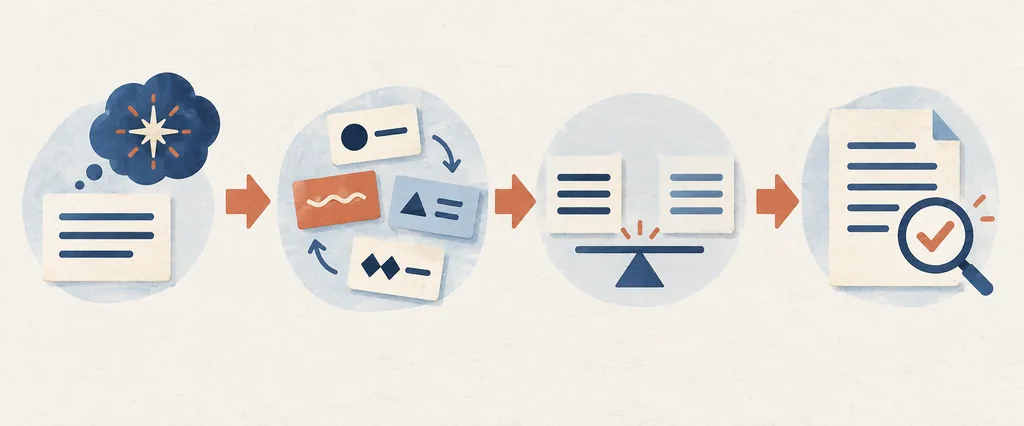
When you need to make this sound more professional, use the same order each time. Separating the decisions makes it easier to spot a tone problem without losing the original message.
1. Identify the reader
Ask who will read the sentence and what they already know. A manager, customer, classmate, and close teammate may need different context and different warmth.
2. State the purpose
Decide whether you are requesting, informing, apologizing, disagreeing, documenting, or proposing. The purpose determines the verb and the amount of explanation.
3. Mark the facts
Underline names, dates, numbers, owners, conditions, and uncertainty words. Treat these as protected details while you adjust the style.
4. Put the main point first
Move the key action or update into the first clause. Add background after the point if the reader needs it to make a decision.
A fast test
If the reader can answer “What is happening, what do you need, and when?” after one pass, the sentence is probably doing its job.
Before-and-After Examples
The examples below show how a professional sentence can become clearer without becoming cold. Each edit keeps the underlying facts and makes the intended action easier to see.
| Context | Before | After | Why it works |
|---|---|---|---|
| Request | Can you get this to me ASAP? | Could you send the revised file by 3 p.m. Thursday? | The request names the item and replaces an unclear deadline with a specific one. |
| Status | We are kind of behind on this. | The review is two days behind the current schedule. | The revised sentence removes a vague hedge and states the measurable update. |
| Follow-up | Just checking if you saw my email. | I am following up on the proposal below; please let me know if you need any detail. | It explains the reason for the message and gives the recipient a simple response path. |
| Disagreement | That idea will never work. | I see a risk in the current approach because it depends on data we do not have yet. | The edit separates the concern from the person and gives a reason that can be discussed. |
There is rarely one perfect professional sentence. Choose the version that fits the reader, channel, and relationship, then check it against the original facts.
Adapt the Sentence to Its Context
Professional writing is situational. The same information can need a different sentence shape in an email, a resume, a report, or a classroom assignment.
| Context | Reader needs | Useful move | Final check |
|---|---|---|---|
| Work email | A clear action and a reasonable deadline. | Use a direct request, a polite opener, and one relevant detail. | Can the recipient reply or act without asking what you mean? |
| Report update | A factual record that others can scan later. | Lead with the status, then name evidence, owner, and next milestone. | Are dates, measures, and sources precise enough to verify? |
| Resume bullet | Evidence of contribution in very little space. | Start with an action verb and include scope, outcome, or method. | Does the sentence describe your work rather than a vague duty? |
When in doubt, use the least formal wording that is still precise, respectful, and appropriate for the relationship.
Mistakes That Make Writing Less Professional
Some edits look formal but make a sentence harder to trust or understand. Watch for these common problems.
- Replacing every verb with a longer one — Utilize is not automatically better than use. Extra syllables can hide the action and make a message sound artificial.
- Using passive voice to avoid ownership — Passive voice is useful when the actor is unknown, but it should not hide who needs to decide, review, or fix something.
- Removing all warmth — A professional message can say thank you, acknowledge effort, or show empathy. Courtesy is different from unnecessary small talk.
- Making a claim stronger — Changing may to will or concern to failure changes the evidence. Keep the original level of certainty unless you have new support.
- Packing several ideas into one sentence — If a sentence contains a status, explanation, request, and deadline, split it so each action is easy to scan.
A Final Checklist Before Sending
Read the finished sentence once for meaning and once for the recipient. This short checklist catches most avoidable problems.
- The first clause tells the reader the main point or action.
- The subject and verb make responsibility clear.
- Names, numbers, dates, conditions, and links match the source.
- The tone is respectful without sounding vague or apologetic for no reason.
- The level of certainty matches the evidence.
- The reader can see the next step, owner, or deadline when one is needed.
- Unnecessary filler, jargon, and repeated words are gone.
- The sentence sounds natural when read aloud.
If one check fails, repair that specific issue instead of adding more formal vocabulary. Small, accurate edits usually create the strongest professional voice.
When a Sentence Tool Helps
A writing method is useful when you want to learn why a sentence works. A sentence tool is useful when you have a draft and want several starting options quickly. The tool can suggest a clearer or more professional version, but you still decide whether the result preserves your facts, tone, and responsibility.
Paste one sentence at a time when possible. Tell the tool the audience and purpose, then compare the suggestion with the original using the checklist above. Do not paste confidential customer, legal, or internal information unless your organization allows it.
FAQ
Summary
To make this sound more professional, start with the reader and purpose, move the main point forward, choose specific and respectful wording, and preserve every important fact. Professional writing is not a performance of formality; it is a clear path from information to action.
Use the final checklist before you send the sentence, and use a rewriting tool when you want alternate wording to review rather than an unquestioned final answer.
Further reading
These editorial references informed the practical distinctions between clarity, tone, and meaning preservation.
- Grammarly Business — Guidance on making workplace writing clearer and more professional.
- PlainLanguage.gov — Plain language principles for writing that readers can understand and use.
Last updated: October 24, 2026